Flashpoints: on-hire, off-hire, demurrage and detention
The first set of flashpoints sits in familiar territory: hire, off-hire, demurrage and detention. Owners argue that when a vessel and crew are ready in all respects, delays caused by verification queues, toll clearance procedures or war-related routing changes should remain on-hire, with demurrage accruing once laytime is exhausted. Charterers, by contrast, increasingly view prolonged waiting times at Hormuz as outside their original commercial bargain, and seek to treat those periods as off-hire or as detention subject to tighter caps.
For time charterers, even a few days of disputed delay can materially alter voyage economics, especially on long-haul crude, product or container trades. Cargo interests are caught in the middle: they may have sale contracts that assume certain delivery windows and freight structures, while the underlying shipping contract is now strained by changing risk profiles and operational uncertainty. Disagreements over whether specific days count as on-hire, off-hire, demurrage or detention increasingly spill over into sales contracts and letters of credit, creating a chain reaction of late delivery notices, renegotiations and claims.
Traditional clauses on safe ports and war risk were often drafted with shorter, more defined conflicts in mind. In the current environment, parties are re-reading these provisions line by line, trying to understand whether orders to load or discharge at ports exposed to Hormuz corridors can be refused, and on what grounds. Owners may proceed “under protest” while reserving rights; charterers may argue that, given market practice, the risk remains commercially acceptable. None of this is theoretical. Each position affects whether hire continues, whether demurrage runs, and ultimately who bears the cost of delay.
War risk premiums: shifting cost and responsibility
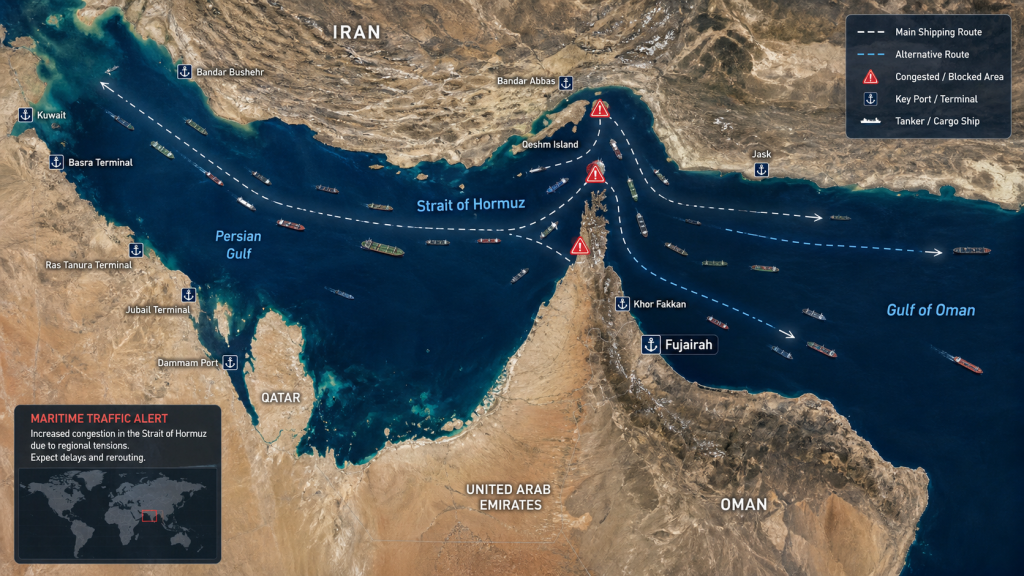
War risk insurance has moved from a background requirement to a primary cost driver for voyages touching the Hormuz region. Additional war risk premiums that were once modest are now, for some ships, sizeable enough to change routing decisions. When underwriters redraw high-risk zones or impose surcharges for entering specific areas in the Persian Gulf or Gulf of Oman, the question is simple but difficult: who pays?
Many charter parties place responsibility for “additional premiums” on the charterer, but in practice the language is often tested. Is a sharp and sustained increase in war risk cost still an “additional premium” in the traditional sense, or has it become a structural part of the freight rate that should be rebalanced? Owners argue that without reliable reimbursement, repeated passages through Hormuz are commercially unsustainable, especially where banks and reinsurers have tightened limits for exposures connected to Iranian waters. Charterers push back, wary of open-ended liability and concerned that indices used to benchmark freight may not fully reflect the new cost profile.
For cargo interests, the visibility of these war risk charges is equally important. A sudden hike in premiums can erode the economics of a commodity trade, undermine agreed FOB or CIF structures, and strain relationships with buyers further down the chain. Brokers and insurers find themselves having to explain not just the size of war risk surcharges, but also the logic behind them, as clients ask why routes that once carried relatively modest risk now attract high-priced cover.
Iranian tolls and the sanctions dilemma
Overlaying the contractual tension is the emerging practice of Iranian “tolls” for safe passage. Reports describe arrangements under which Iranian authorities or affiliated entities allow certain vessels to transit the Strait of Hormuz after ship-by-ship vetting and payment of a toll, sometimes in non-USD currencies or alternative payment channels. On its face, this offers a degree of operational certainty in a difficult corridor. In reality, it introduces a major sanctions dilemma.
For shipowners and charterers, agreeing to such tolls may help avoid boarding, diversion or long delays, but it raises the risk that they are dealing with sanctioned entities or making transactions covered by U.S. and secondary sanctions regimes. Compliance departments, banks and insurers are alert to this. Questions quickly arise: who authorised the payment, what legal analysis was conducted, how was the counterparty screened, and was any part of the transaction routed through the U.S. financial system?
Marine insurers and P&I clubs must consider whether toll payments could breach sanctions warranties or misrepresentation clauses in their policies. If a vessel pays a toll to a designated entity without proper licences or clear legal comfort, underwriters may argue that coverage for certain events has been compromised. Bank compliance teams assess whether continued lending or trade finance support to parties engaging in such payments is compatible with their own obligations. Cargo interests, meanwhile, face a different concern: if passage depends on toll payments later judged problematic, they may find delivery routes disrupted or insurance recoveries contested.
The net effect is a new source of dispute. Parties argue not only over the commercial wisdom of paying tolls, but also over whether one side’s unilateral decision to pay has altered the contractual balance, breached warranties or created regulatory exposure that the other party never agreed to shoulder. Documentation, audit trails and clear governance around decision-making become essential, not optional.
Questioning the validity of Baltic Exchange indices
A further layer of complexity comes from the debate over whether key freight benchmarks accurately reflect the impact of Hormuz-related disruption. Baltic Exchange tanker indices sit at the heart of global freight pricing. Traders, shipowners, charterers and banks rely on them to value routes, settle derivatives and structure contracts. Lawsuits and market commentary have raised the concern that some benchmarks may not fully capture the operational reality of voyages affected by heightened war risk, delays and toll practices.
From the perspective of a trader or charterer, if an index treats a route as effectively open and freely tradable while, in practice, voyages encounter long waiting times, elevated war risk premiums and sanctions-sensitive tolls, there is a risk that the benchmark understates the true cost of carriage. This misalignment can lead to underpriced freight, unexpected losses on derivatives, and strained relationships when counterparties realise that their reference rate did not match the experience on the water.
The Baltic Exchange and market participants, on the other hand, point out that ships are still trading through Hormuz, and that indices are designed to capture transactions based on reported fixtures and market data. The tension lies in how quickly and effectively benchmarks adapt to fast-moving geopolitical events, and how transparent their methodology is when risk profiles change. For banks, insurers and risk managers, this debate matters because it influences how they model exposure, price cover and rely on indices baked into loans, guarantees and policies.
Implications for the wider maritime supply chain
For shipowners, the immediate implication is the need to tighten and clarify charter party language around war risk, sanctions and delays. Owners must ensure that hire, off-hire, demurrage and detention provisions are robust enough to handle Hormuz-type disruptions, and that their insurance arrangements, including war risk and P&I cover, align with the realities of toll payments and sanctions compliance. Transparent communication with charterers and cargo interests is vital to avoid surprises when premiums rise or routes change.
Charterers face the task of managing their own risk while remaining commercially attractive to cargo interests. They must weigh whether to accept responsibility for escalating war risk costs, how to respond to index and benchmark controversies, and when to challenge or renegotiate longstanding contractual assumptions. Clear internal policies on toll payments, sanctions checks and route selection help keep operations consistent and defensible.
Cargo interests, particularly large energy and mining groups, cannot treat these issues as “shipping problems” alone. Delivery windows, pricing formulas and security of supply are all affected by Hormuz-related disruption. Engaging early with logistics partners and insurers to understand how war risk and sanctions considerations are being handled can help avoid misunderstandings that show up later as claims or disputes.
Insurers, P&I clubs and brokers are in a central role. They must balance the need to support clients with the realities of reinsurance capacity, regulatory expectations and sanctions frameworks. Updating guidance, clarifying the consequences of certain payments or routes, and explaining how war risk premiums are calculated all form part of maintaining trust. At the same time, they need to maintain strong underwriting discipline in areas where risk has fundamentally changed.
Banks and trade finance providers are equally exposed. Credit lines, guarantees and letters of credit often assume that cargoes will move through chokepoints like Hormuz under stable conditions and within recognised legal frameworks. When tolls, sanctions questions and benchmark disputes enter the picture, lenders must revisit their risk assessment, covenants and internal escalation procedures to ensure that they understand how their borrowers are navigating the corridor.
Practical steps and a more integrated approach
The common thread running through Hormuz contract disputes is the need for a more integrated approach to risk. Legal teams, operations managers, compliance officers, insurers and financiers all have a piece of the puzzle, but none can manage it alone. Before fixing voyages that pass through Hormuz, stakeholders should be clear on how hire and off-hire will be handled in the event of delay, who pays additional war risk premiums, what the policy is on toll payments, and which benchmarks or reference rates are being used to price freight and hedge exposure.
For companies active in global shipping and marine insurance, the Strait of Hormuz is a reminder that today’s strategic bottlenecks are as much about contracts, regulation and data integrity as they are about geography. The more clearly parties define responsibilities and decision-making processes, the better chance they have of keeping ships moving, cargoes delivered and disputes contained in a corridor that will remain vital – and volatile – for years to come.